
Tube & Tube Fittings
Precision Fluid Connections for High-Performance Hydraulic & Instrumentation Systems
Tube and tube fittings are precision-engineered components used to connect, route, and control fluid flow in hydraulic, pneumatic, and industrial systems. Unlike flexible hose assemblies, tube systems provide rigid, high-integrity connections designed for high-pressure and high-vibration environments where reliability and leak prevention are critical.
Tube fittings create secure, leak-resistant seals using mechanical compression or ferrule-based designs, ensuring consistent performance across demanding applications. These systems are widely used in OEM equipment, industrial machinery, and instrumentation systems where accuracy and durability are essential.
What Are Tube Fittings?
Tube fittings are mechanical connectors designed to join tubing to other tubing, pipe systems, or equipment ports. They are engineered to:
- Create leak-free, high-pressure seals
- Resist vibration and thermal cycling
- Allow easy assembly and disassembly
- Maintain system integrity without welding or permanent bonding
Modern hydraulic and instrumentation systems often rely on tube fittings because they provide a more consistent seal than threaded pipe systems and require less maintenance over time.
Common Types of Tube Fittings
- Compression fittings for general-purpose tube connections
- Ferrule (double ferrule) instrumentation fittings for high-pressure sealing
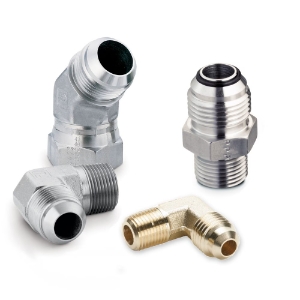
- Flared fittings (JIC 37°, SAE 45°) for strong mechanical sealing
- Flareless fittings for vibration-resistant applications
- Tube-to-tube, tube-to-pipe, and adapter configurations
Ferrule-based and compression-style designs are widely used in hydraulic systems because they create reliable seals under vibration and pressure without requiring sealants.
How Tube Fittings Work
Tube fittings typically function by mechanically compressing the tube or using ferrules that grip and seal the tubing surface. This controlled deformation creates a strong, repeatable seal that maintains pressure integrity even in demanding environments.
This makes them ideal for systems where:
- Pressure is high
- Fluid cleanliness is important
- Maintenance access is required
- Vibration or movement is present
Materials & Construction
Tube fittings are commonly available in:
- Stainless steel for corrosion resistance and high-pressure use
- Brass for moderate pressure and general industrial applications
- Carbon steel for heavy-duty hydraulic systems
Material selection depends on system pressure, fluid type, temperature, and environmental exposure.
Applications
- Hydraulic power systems
- Industrial machinery and automation
- Agricultural equipment (sprayers, harvesters, tractors)
- Construction equipment
- Instrumentation and process control systems
- OEM equipment manufacturing
Tube fittings are especially common in systems requiring precise control and long-term leak prevention under pressure.